A Brevard County Homeowner’s Post-Storm Safety Checklist + Repair vs Replace Guide
After a Florida storm, it’s normal to focus on the obvious damage like roof shingles, screens, and fences, but one of the most important “structural” checks is often overlooked: your garage door.
If you’ve been searching for garage door repair near me because your door is stuck, crooked, or making new noises after heavy wind and rain, this guide is for you.
We’ll walk through what to check, what not to touch, how to prevent further damage, and when it’s smarter (and safer) to repair versus replace.
Why A Storm-Damaged Garage Door Is More Than “Just A Dent”
A garage door is one of the largest openings in a home.
When wind events damage that system—panels, tracks, or anchor points—your door can lose the ability to hold its shape and seal.
Research from the Insurance Institute for Business & Home Safety (IBHS) notes that garage doors in high-wind events are often damaged due to debris impacts, wind pressures, weak tracks, or inadequate attachment to the building.
Even if your home looks “fine,” a compromised door can create:
- Safety hazards (a door that can slip, drop, or derail)
- Security gaps (easy forced entry)
- Secondary damage (water intrusion, corrosion, opener failure)
That’s why post-storm issues aren’t something to “wait and see.” Getting garage door repair Brevard County FL, that homeowners trust, helps restore structural alignment and safe operation before the next round of wind or rain.
First: A 10-Minute Post-Storm Garage Door Safety Checklist
Before you touch the opener button, run this quick check.
1) Look for “stop signs” (don’t operate the door if you see these)
- The door is off-track (rollers not seated in the track)
- You see a hanging cable or a visibly snapped cable
- A spring looks broken (gap in torsion spring), or you hear a loud “bang” earlier
- The track is bent inward or pulling away from the wall
- Door is binding, tilted, or visibly “racked” (one side lower)
These issues can make the door unstable. Forcing the opener can turn a repair into a bigger, more expensive failure.
2) Check the weather seal and bottom seal (water + pests entry)
Storms often destroy weather stripping and seals. Replacing worn or missing seals helps keep moisture and outside elements out.
3) Inspect the opener area for water exposure
If you had garage flooding or wind-driven rain:f
- Don’t use the opener if it smells burnt, trips breakers, or behaves erratically.
- Photograph water lines or visible corrosion for documentation.
4) Document everything (your future self will thank you)
Take wide shots and close-ups of:
- Panels (dents/cracks)
- Tracks and mounting points
- Springs/cables
- Opener and sensors
- Weather seals
This helps with “before/after” comparisons and can support insurance conversations if needed.
Common Storm-Related Garage Door Damage We See In Brevard County
Brevard homes take a unique mix of wind, heavy rain, and coastal air exposure. Your local area description calls out “frequent storms,” plus “wind, salt air, and heavy rainfall” that can wear down hardware more quickly.
Here are the most common patterns:
Wind pressure + misalignment
High wind can flex the door and shift alignment, leading to:
- Jerking/shaking motion
- Uneven travel
- Track rubbing or roller wear
Flying debris dents that become structural weaknesses
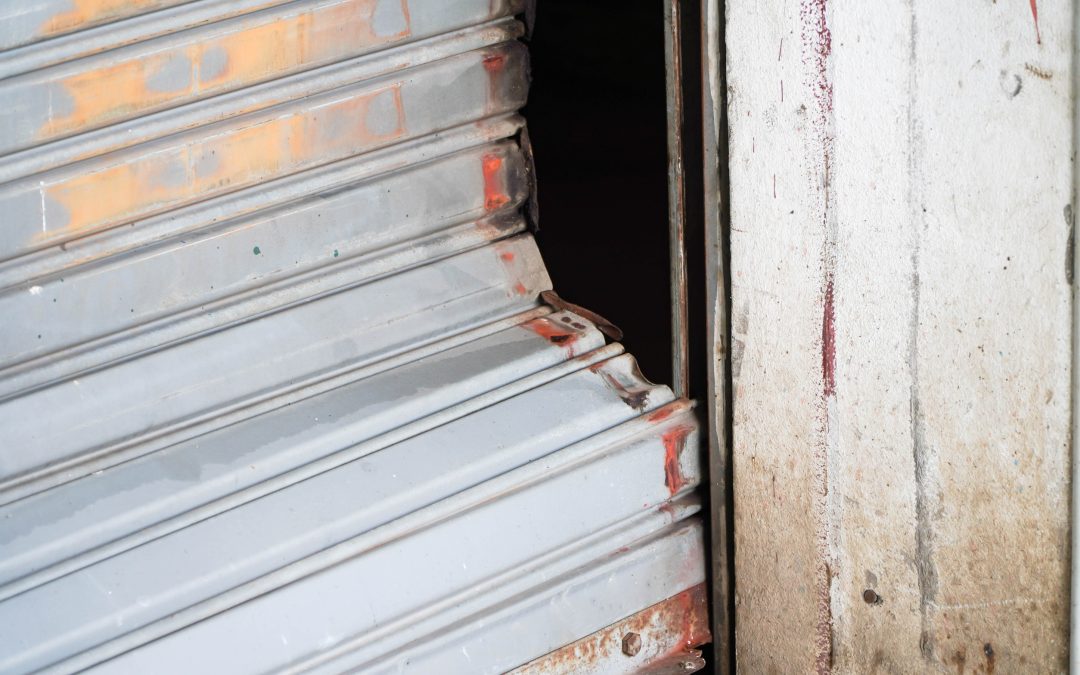
A dent isn’t always cosmetic. On thinner or older doors, a “small” dent can:
- Distort the door’s stiffness
- Increase stress on hinges and track
- Create gaps where wind-driven rain enters
Salt air corrosion that accelerates failures after storms
When moisture sits on hardware, rust spreads fast—especially on:
- Springs
- Bottom brackets
- Track fasteners
- Roller stems
Florida wind-load reality check (simple explanation)
Florida’s building standards address wind impacts, and garage doors are part of that conversation. For homeowners, the takeaway is simple:
If you repair/replace major components or upgrade the door, you want it matched to local wind-load expectations.
One reference point is the Florida Building Code section on garage doors and wind loads (tables that relate wind speed and door size). And Florida’s building resources explain how wind-load criteria align with standards like ASCE 7.
You don’t need to memorize code tables, but you do want a contractor who can explain what rating your home needs and why.
Repair Replace After Storm Damage: A Homeowner’s Decision Guide
Here’s a practical way to decide what direction to take.
Repair is usually the right call when…
- Damage is limited to replaceable parts (springs, cables, rollers, hinges)
- Track is only slightly out of alignment (not torn off the wall)
- The door is structurally sound, and the panels are not significantly bowed
- Seals/weather stripping are torn (common and fixable)
Common repair items include broken springs, frayed cables, bent tracks, damaged tracks, and worn weather seals.
When the structure is sound and only components are damaged, a garage door repair Brevard County FL residents can depend on can restore performance quickly without pushing you into a full replacement.
Replacement is often smarter when…
- Multiple panels are cracked/buckled, and the door has lost rigidity
- The door repeatedly comes off track, even after adjustment
- The opener and door are both aging, and failures are “stacking”
- You want a wind-rated upgrade for future storms (especially if your existing door is older and lightweight)
If you’re unsure: start with an inspection and estimate, then choose based on the actual findings.
Preventing Further Damage While You Wait For Service
If you can’t get a tech out immediately, these steps can reduce risk:
- If the door won’t close fully, use temporary barriers (plywood/tarping) to reduce water intrusion.
- Keep the area clear: remove loose debris and objects near the door opening.
- Avoid DIY spring work: springs are high-tension components—this is where injuries happen.
What A Professional Storm-Damage Inspection Should Include
A real inspection should cover:
- Full system check so you “only fix what’s needed”
- Springs/cables condition and correct tension
- Track alignment, anchoring, and roller wear
- Sensor safety checks and opener function
- Seal integrity to help keep out outside elements
Garage Doors Guaranteed’s repair services list many of these common failure points (springs, cables, off-track, damaged track, weather seals, sensor failure).
Related Resources From Our Blog
If your storm damage revealed underlying issues, these two guides can help you understand what you’re seeing:
- Garage Door Jerking When Closing? Here’s What You Need to Know
- Factors That Affect the Lifespan of Your Garage Door
And if you want more homeowner-friendly guides, browse the full Garage Doors Guaranteed blog.
Conclusion
Storm damage isn’t always obvious, but garage door problems tend to get worse when ignored, especially in Florida’s wind-and-moisture conditions. Start with a safety-first inspection, clear documentation, and a plan that prevents secondary damage.
The best time to prepare is now: address small misalignments and replace worn seals, before minor issues become emergencies.
And if you still find yourself typing garage door repair near me after the next storm, request a free estimate, so you can fix what’s necessary now, and reduce risk before the next storm.