Expert Blog
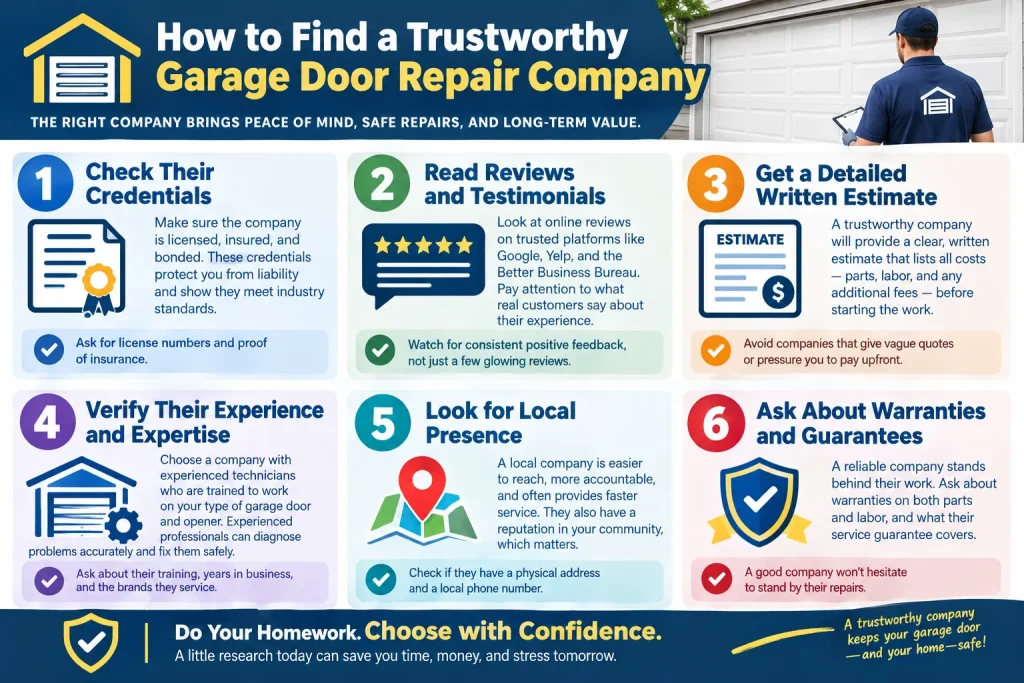
A trustworthy garage door repair company proves itself through verifiable licensing, honest pricing, and a written labor warranty before a homeowner ever agrees to schedule work. Finding one takes a short, repeatable verification process, not luck or a convincing advertisement. Every step in that process confirms a claim the company …
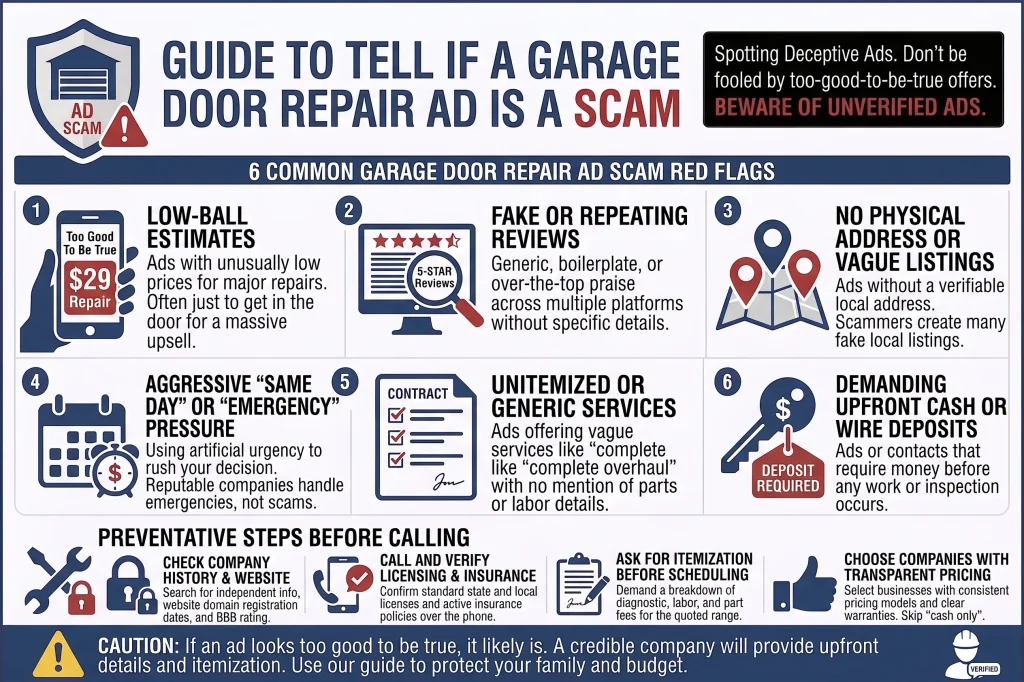
An honest garage door repair ad names a real business, a real price range, and a real service area without vague language standing in for facts. A scam ad typically hides at least one of these details behind generic branding, an unrealistic price, or reviews that read the same across …
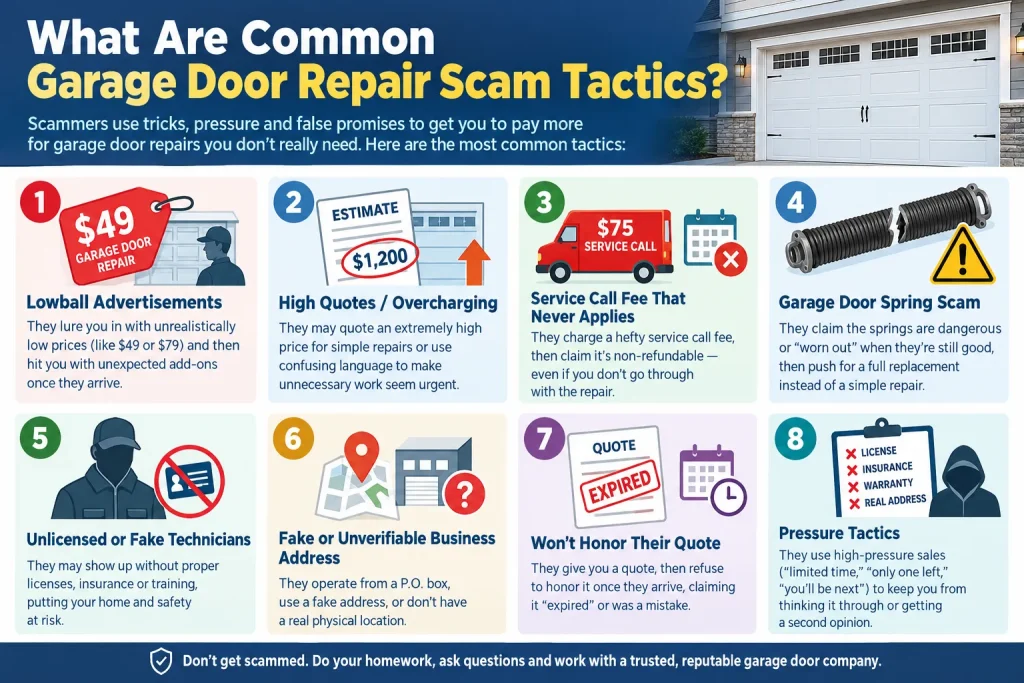
A garage door repair company running a scam typically relies on a handful of repeatable tactics rather than inventing a new approach for every customer. Bait pricing, fake urgency, and unverifiable technicians form the backbone of nearly every garage door repair scam reported across the industry. Recognizing these tactics by …
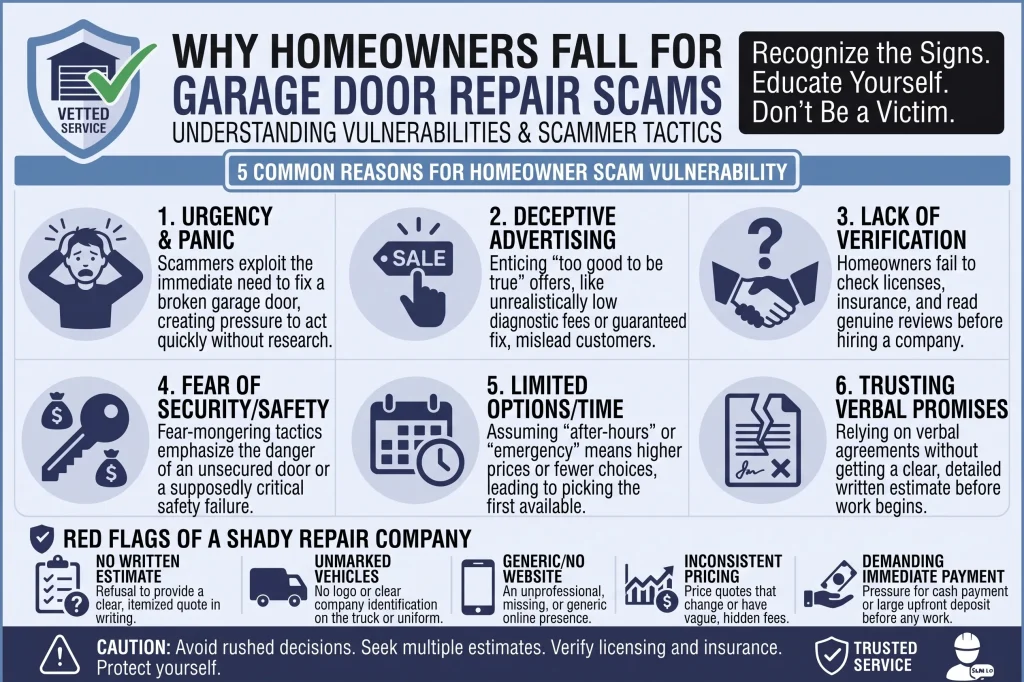
Urgency, unfamiliarity with spring and cable pricing, and convincing sales tactics explain why homeowners fall for garage door repair scams more often than you might think. A rushed installation or repair skips the basic checks that would otherwise expose a bad actor in the garage door industry. Recognizing these tactics …
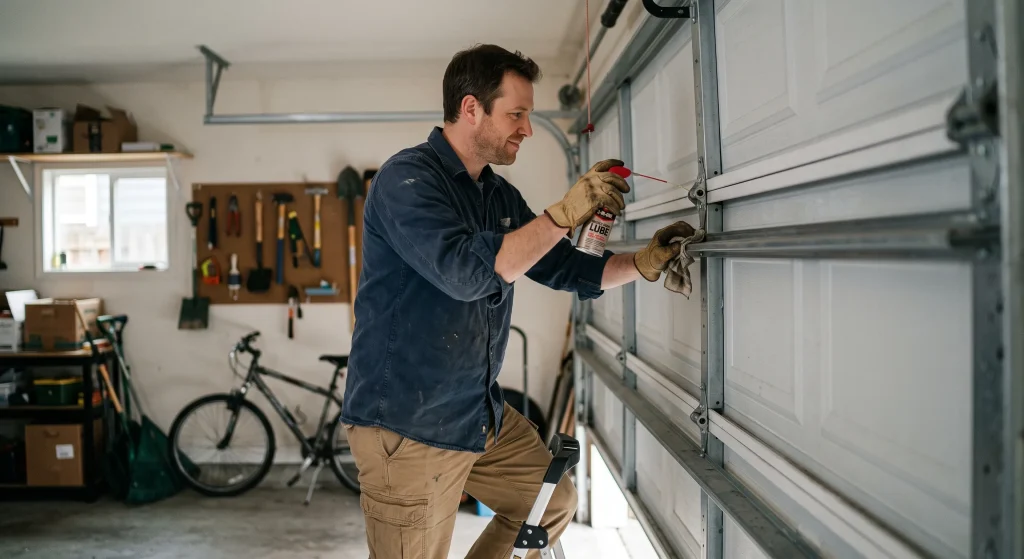
A garage door stops making noise when returning by maintaining a consistent routine of lubrication, hardware checks, and timely repairs after the first fix is completed. Skipping any of these steps is usually why the same noise reappears within just a few weeks of the initial repair. Stopping a noisy …
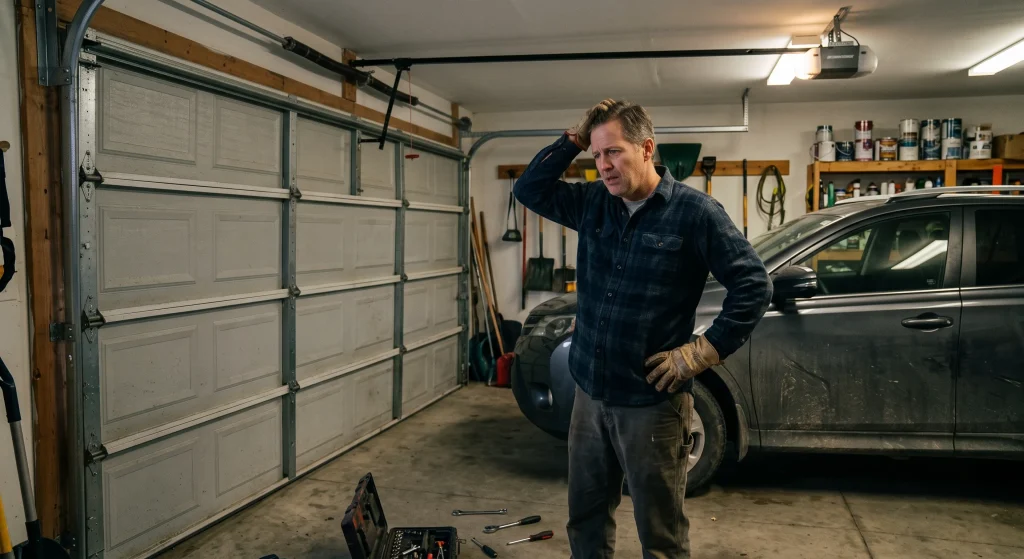
A noisy garage door usually comes down to a specific set of fixable causes, and identifying which one applies is the fastest way to stop the sound for good. Loose hardware, worn rollers, dry hinges, or an aging opener are the most common causes of the noise, and each one …