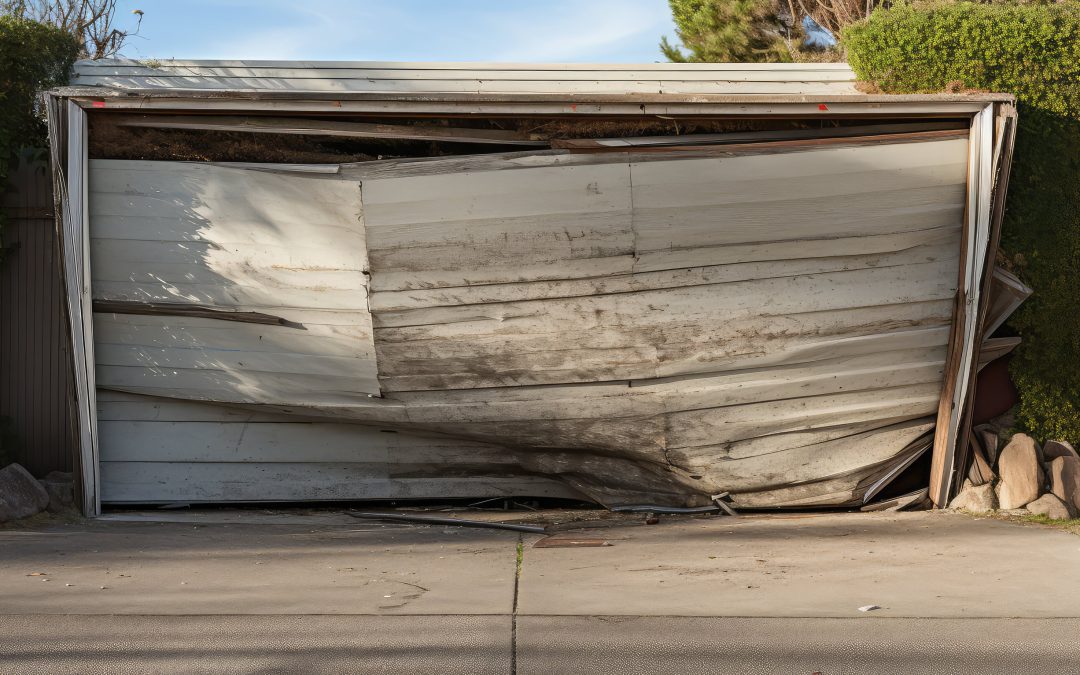
When Florida wind events roll through the Space Coast, garage doors often take the hit first, because they’re one of the biggest, most exposed openings in your home. NOAA even calls out garage doors as a key vulnerability to check for hurricane risk.
If you’re urgently searching for garage door repair near me after a storm, you’re not alone. Wind can push, pull, rattle, and twist the entire door system in ways that don’t always look dramatic at first, but can quickly turn into a door that won’t open, won’t close, or become unsafe to operate.
This guide is written specifically for Brevard County homeowners who need practical next steps now.
Start Here: Safety First
After wind damage, the biggest homeowner mistake is trying to “muscle” the door open or repeatedly pressing the opener button. Garage doors are heavy, and the system is under tension (especially the springs and cables).
If wind bends the track or shifts hardware, forcing movement can worsen damage or create a serious safety hazard.
The 10-Minute Post-Wind Inspection You Can Do Safely
This is not a DIY repair section. It’s a homeowner triage checklist to gather info and reduce risk.
1) Don’t keep running the opener
If the door is binding, the opener can:
- Strip internal gears,
- Bend the rail,
- Pull the door further off-track,
- Or snap a weakened component.
2) Look for these common wind-damage signs
Walk the outside and inside of the garage. You’re looking for “clues,” not perfection.
Door panel and surface issues
- Bowed sections (looks like the panel is “oil-canning”)
- Creases or dents near hinges
- Gaps along the door edges where wind-driven rain can enter
Track and hardware issues
- The track is pulling away from the wall
- Rollers rubbing the track edge
- Brackets that look twisted or loose
- Hinges that look bent (even slightly)
Opener and sensor issues
- Sensor eyes knocked out of alignment
- Loose opener mount points from vibration
- Power flicker-related opener errors
These are exactly the kinds of symptoms that trigger searches like garage door repair near me the morning after a wind event, because everything “kind of works” until it suddenly doesn’t.
3) Stop immediately if you see any red flags
If you see any of the following, do not try to operate the door:
- A spring with a visible gap (broken spring)
- Slack cables or cables off the drum
- Door hanging crooked or off-track
- Door dropping quickly or feeling unusually heavy
These are “pro-only” situations. If you’re in this category, a quote request for garage door repair should be treated as urgent.
What to Document for a Faster Quote Request
Want the fastest turnaround on pricing and scheduling? Provide clear visuals. Here’s the exact set of photos/videos that makes estimates easier:
- Photo of the full door from outside
- Photo of the full door from inside (if safe)
- Close-up of the most obvious damage (dent, crease, crack, bent hinge)
- Photo of the track where the problem occurs
- 10–15 second video of what happens when you try to operate it (only if safe)
Repair vs Reinforce vs Replace (Simple Decision Guide for Brevard County Homes)
This is where most competitor pages are vague. Here’s the homeowner-friendly breakdown.
Option A: Repair (best when damage is localized)
Repair often makes sense when:
- Damage is limited to one area (like a hinge/roller/track section),
- The door is still structurally sound,
- Or the opener is the only component affected.
If your door was operating normally before the wind event and now jams or grinds, a targeted repair is frequently the fastest path.
Option B: Reinforce (best when the door is usable but flexing under gusts)
Reinforcement is a smart middle ground if:
- The door works but feels shaky or flexes,
- Hardware shows stress but isn’t destroyed,
- Or you want to reduce future wind-related issues.
This can include adding reinforcement struts, upgrading brackets, replacing worn rollers, or correcting alignment issues.
Option C: Replace (best when the door is structurally compromised)
Replacement becomes the right choice when:
- Multiple panels are bowed or cracked
- The door is repeatedly coming off track
- The framing/track supports were pulled out
- Or the door is older and can’t be stabilized safely
In Brevard County, replacement decisions often come down to a mix of safety + storm resilience + long-term cost. A reputable company should explain whether the repair is safe or whether you’ll be paying repeatedly for patch fixes after each wind event.
The 48-Hour Plan after Florida Wind Damage
This is the “do this now” roadmap homeowners wish they had.
Within 2 hours
- Keep the door closed if it’s safe (limits rain intrusion)
- Disconnect power to the opener if the door jams
- Take photos/video for your quote request
Within 24 hours
- Request inspection + estimate
- Ask whether the problem is repairable or structural
- Confirm warranty terms for parts and labor (where applicable)
Within 48 hours
- Approve repairs before the door fails completely
- If replacement is recommended, ask about wind-related reinforcement options
- Schedule before the next weather system (post-storm demand spikes fast)
How to Choose a Company You Can Trust (Without Getting Upsold)
If you’re searching for garage door repair Brevard County FL homeowners speak highly of, here’s a practical checklist that protects you:
Trust checklist for post-storm repairs
- Clear, written estimate (not vague “starting at” pricing)
- Explains repair vs reinforce vs replace (and why)
- Doesn’t pressure you into a full replacement if the repair is safe
- Offers a free estimate (important for comparison shopping)
- Has real local reviews with specific details (punctuality, cleanliness, communication)
A subtle red flag: anyone who refuses to explain what failed and why, especially after wind damage, often isn’t planning a durable fix.
Prevention Tips to Reduce Wind Damage Next Time
If your garage door survives a storm but “feels different,” prevention now is cheaper than emergency repair later.
1) Tighten and tune before storm season
Many wind failures start as small issues:
- Loose brackets
- Worn rollers
- Dry hinges
- Slightly shifted tracks
2) Replace worn weather seals
Wind-driven rain is a big deal in Florida. A worn bottom seal and side seals can turn a minor storm into a soggy garage.
3) Don’t ignore early warning sounds
Grinding, squealing, or shaking isn’t “normal.” It’s often a sign the system is under strain—and wind events amplify strain fast.
Related Reading (Internal Blog References)
For more homeowner-friendly education (and to help you describe symptoms accurately in your quote request), check this guide: “Top 5 Most Common Garage Door Repairs Explained.” This internal reference helps homeowners self-diagnose safely and improve estimate accuracy.
Request Your Free Estimate in Brevard County
If you need garage door repair after wind damage, an inspection is the best way to confirm what’s safe, what’s repairable, and what should be reinforced for the next storm season.
Use the inspection checklist above to submit a quote request with the exact photos and details that get you the fastest, most accurate recommendation.
Finally, if you’re comparing providers and want garage door repair Brevard County FL homeowners can trust, prioritize the company that explains options clearly, documents the issue, and helps you choose the most durable path, not the most expensive one.