

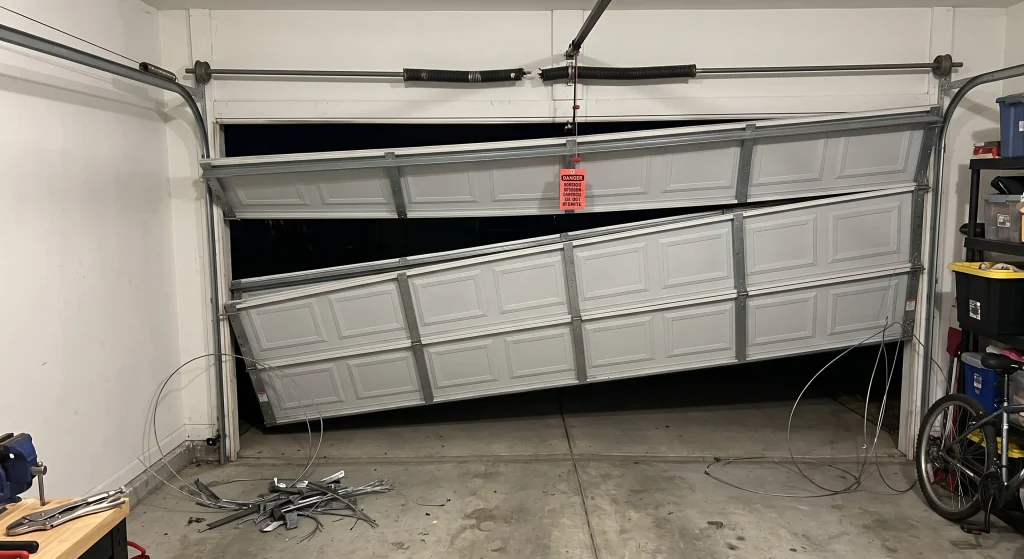
A noisy garage door is most often caused by dry or worn moving parts, loose hardware, or aging springs that lose tension over time, affecting performance. Each of these issues produces a distinct sound, and most people’s first instinct is to assume the noise will fade on its own with continued use.
That instinct overlooks the specific mechanical cause behind the sound, and finding that cause early leads to a garage door repair that actually solves the problem. Understanding what causes a noisy garage door means looking closely at the rollers, hinges, tracks, and springs that make up the entire system.
Warning Sounds Before a Garage Door Problem Grows
Early signs of a noisy garage door include sounds the system makes before an underlying mechanical issue becomes obvious enough to warrant attention and immediate action from the owner.
Common early signs of a noisy garage door include:
- High-pitched squealing near the rollers or hinges as they move
- A grinding or scraping sound concentrated at one section of the track
- Rattling or shaking hardware on the hinges and track brackets
- A loose chain slapping against the rail on the chain drive openers
- Sudden banging or popping sounds as the door opens or closes
To recognize these warning sounds before they turn into a larger mechanical issue, read our guide on Early Signs of a Noisy Garage Door, which explains what each sound means and when it calls for a closer look.
Common Causes of a Noisy Garage Door
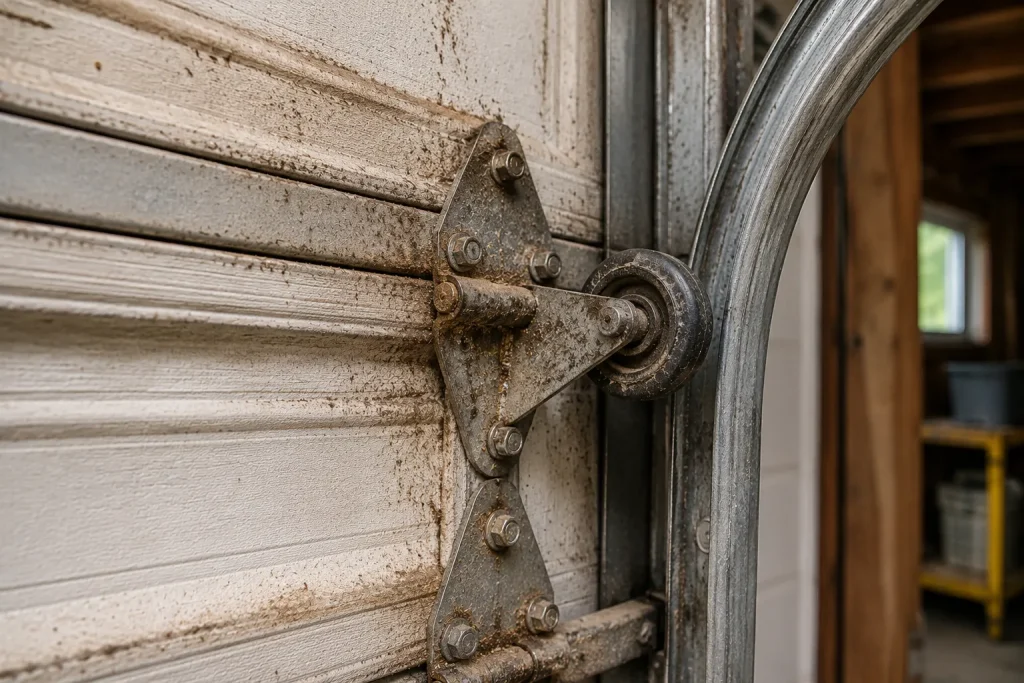
Lack of Lubrication
Dry friction between metal parts turns ordinary daily movement into a squeaky garage door within weeks of missed maintenance.
Common reasons lubrication runs out or fails include:
- Factory grease that breaks down after months of heat and friction
- Dust and debris that mix with old grease and thicken over time
- Rain and coastal humidity that washes lubricant off hinges and rollers
- Long gaps between maintenance visits that let parts run dry
- Sudden temperature swings that harden grease in cold or thin it in heat
Applying silicone lubricant to these parts every six months keeps the entire door system running noticeably more quietly.
Worn-Out Rollers
Garage door rollers absorb constant mechanical stress as they guide the door along the metal tracks year after year.
Roller wear typically develops for these reasons:
- Thousands of open and close cycles that flatten the roller surface
- Moisture that works into the bearing housing and triggers rust from the inside out
- Steel construction that fatigues faster than nylon under the same daily load
- Misaligned tracks that force certain rollers to absorb more pressure than others
- Frequent heavy use, common in busy households, speeds up normal wear patterns
Swapping steel rollers for nylon rollers through proper garage door roller repair remains one of the most effective upgrades for quiet, long-lasting operation.
Loose Hardware
Constant vibration from daily use gradually loosens nuts, bolts, and screws throughout the entire door system.
Hardware tends to loosen over time for these reasons:
- Vibration cycles that shake fasteners out of their original position
- The installation torque settles and weakens during the first few months
- Metal brackets that expand and contract with seasonal temperature shifts
- Heavier doors that place added strain on every connection point
- Skipped maintenance checks that let small movement build into real looseness
A socket set makes quick work of tightening loose hardware, provided the door stays closed, and the opener stays disconnected first.
Misaligned Tracks
Bent or shifted metal tracks disrupt the smooth, straight path that rollers depend on to move without friction or resistance.
Tracks fall out of alignment for several reasons, including:
- Accidental impact from a parked vehicle, ladder, or stored equipment nearby
- Loose mounting brackets that let the track drift out of position
- Minor shifts in the garage wall or foundation that alter the track’s angle
- Forceful manual operation during a malfunction that bends the track
- Years of vibration that loosen the hardware holding the tracks in place
Correcting a misaligned track requires precise adjustment with the proper tools and technique every time.
Noisy Garage Door Openers
Sometimes the sound traces back to the garage door opener mechanism itself rather than the door panels that move.
Garage door openers become noisy for a handful of common reasons, including:
- Chain drive systems that produce more mechanical noise than belt designs by nature
- A chain that loses proper tension over time and slaps against the rail
- Motor gears that wear down internally after years of daily operation
- Loose mounting hardware that lets the entire unit vibrate against the ceiling
- Dry drive components that increase friction wherever lubrication has worn away
Belt-drive openers with a rubber belt tend to run noticeably quieter than chain-drive alternatives over time.
Failing or Dry Springs
Torsion springs carry the full weight of the door and operate under constant high tension every single day without rest.
Springs fail or grow noisy due to several factors, including:
- Thousands of tension cycles that gradually fatigue the metal coil over the years
- Rust from humidity that reduces the spring’s flexibility and smooth release
- Natural metal fatigue that sets in after years of repeated daily stress
- Manufacturing inconsistencies that occasionally weaken a coil earlier than expected
- Incorrect spring sizing for the door’s weight adds avoidable strain to the system
Spring tension is sufficient that a failing coil should always be left to a professional through proper garage door torsion spring repair.
What Happens if a Noisy Garage Door Is Left Unaddressed
Ignoring garage door noise for too long often turns a minor mechanical issue into a much larger repair down the road.
Leaving a noisy garage door unaddressed can lead to:
- Worn rollers that grind further and damage the metal tracks
- Loose hardware that loosens completely and causes panel misalignment
- Dry hinges that seize up and restrict normal door movement
- A stressed spring that snaps suddenly during regular use
- An opener motor that strains and fails mid-cycle
Small noise problems rarely stay small, which makes early attention the simplest way to avoid a much bigger repair later.
What’s the Best Action to Take for a Noisy Garage Door
The right response to a noisy garage door depends on how severe the sound is and which part of the system is causing it.
The best actions to take for a noisy garage door include:
- Inspecting hinges, rollers, and tracks for visible wear or rust
- Wiping down metal parts to check for grinding residue or buildup
- Listening closely during a full cycle to locate the exact sound
- Applying lubricant first if the noise seems minor or inconsistent
- Tightening any loose bolts found near hinges or brackets
To walk through each available repair option in more practical detail, read our guide on How to Fix a Noisy Garage Door, which breaks down exactly when a simple fix is enough and when it isn’t.
When to Call a Professional for a Noisy Garage Door Repair
Garage door problems sometimes carry enough risk that calling a professional makes more sense than attempting a fix at home.
A professional is worth calling when:
- Torsion springs show visible rust, stretching, or damage
- The door moves unevenly or gets stuck partway through a cycle
- Noise continues even after lubrication and tightening hardware
- A cable appears frayed, loose, or close to snapping
- Metal tracks are visibly bent or pulled away from the wall
Attempting repairs on springs, cables, or tracks without proper training carries a real risk of serious injury and further damage.
How Professionals Fix a Noisy Garage Door
A structured repair process helps trained technicians find and correct the exact underlying source of garage door noise.
A typical professional repair process includes:
- Testing each moving part individually for wear or resistance
- Checking spring tension and cable condition for signs of stress
- Running the door through several cycles to isolate the sound
- Replacing worn rollers, hinges, or hardware with new parts
- Adjusting or realigning tracks to restore smooth movement
Hands-on experience, paired with the right tools and equipment, delivers a repair that lasts for years to come.
Preventing a Noisy Garage Door From Coming Back
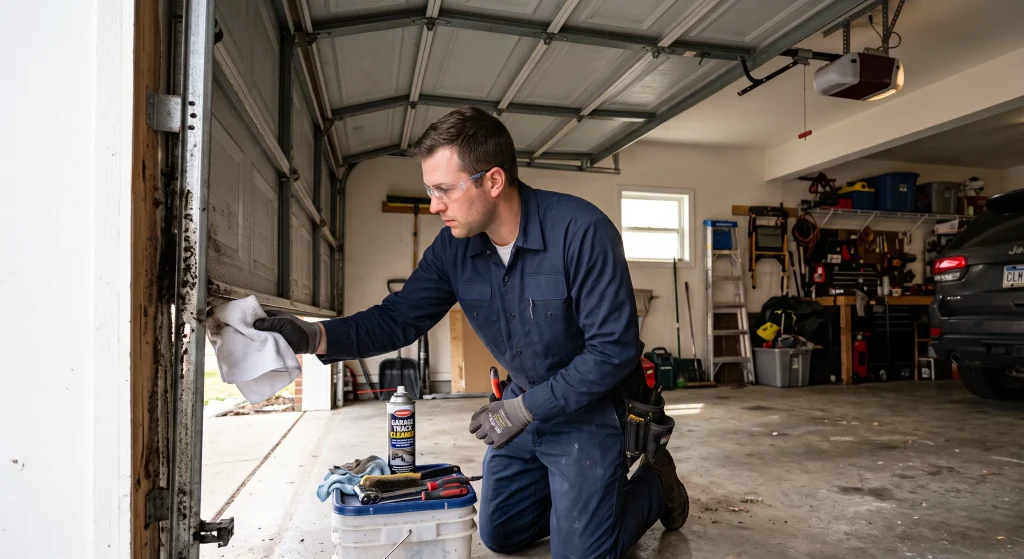
Regular garage door maintenance keeps small noise issues from becoming frequent, expensive problems over time.
Simple ways to prevent garage door noise include:
- Applying silicone lubricant to hinges and rollers every few months
- Wiping down tracks with a clean cloth to remove debris
- Tightening hardware during routine checks around the home
- Scheduling a professional inspection once a year
- Addressing new noise issues as soon as they appear
To build a comprehensive maintenance routine that keeps the entire system running quietly for years, read our guide on How to Prevent a Noisy Garage Door From Returning, which covers the exact steps to follow.
The Causes of a Noisy Garage Door Should Never Be Ignored
A noisy garage door almost always points to a specific, identifiable cause, whether that is dry hinges, worn rollers, loose hardware, or aging springs and their tension. Knowing what to check, when to act, and when to call a professional keeps the entire system running the way it was designed to for many years to come.
Garage Doors Guaranteed brings hands-on experience to every noisy garage door case across Melbourne, FL, from a quick lubrication job to a full spring replacement and beyond. Contact us or give us a call today, and let our team track down the exact cause of the noise behind your door right away.