

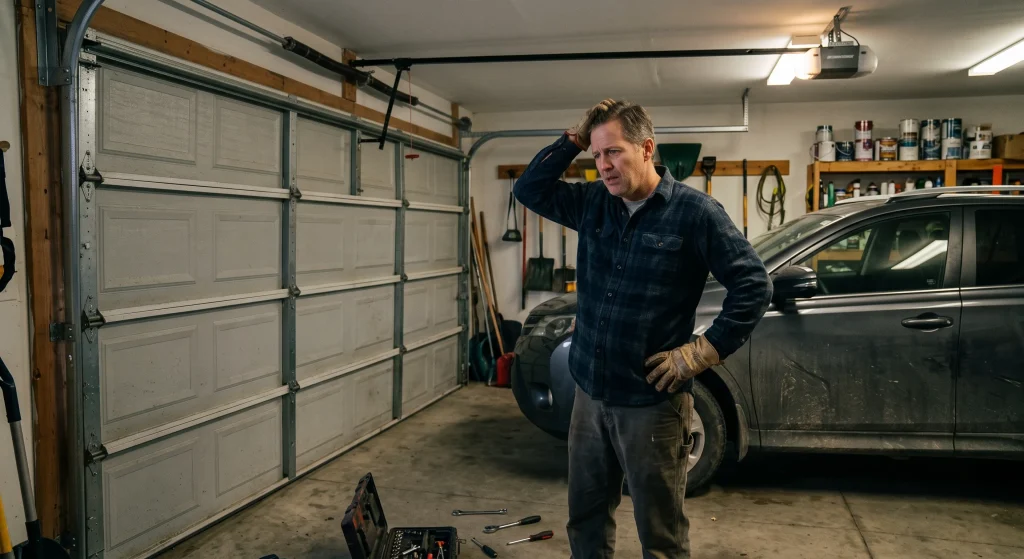
A noisy garage door usually comes down to a specific set of fixable causes, and identifying which one applies is the fastest way to stop the sound for good. Loose hardware, worn rollers, dry hinges, or an aging opener are the most common causes of the noise, and each one points to a different type of garage door repair.
The goal is always to get the door back to smooth, quiet operation as quickly and safely as possible. This guide breaks down how to find the exact source of the noise, apply the fix that best matches it, and know when the job actually calls for a trained technician rather than a hands-on approach.
Why Does a Noisy Garage Door Need Immediate Attention?
A noisy garage door signals that something inside the system is wearing out, and waiting too long to fix it allows the underlying issue to spread to other parts of the door over time, shortening their lifespan.
Common reasons a noisy garage door needs immediate attention include:
- Ignoring dried-out rollers and hinges spreads wear to harder-to-replace parts.
- Loose hardware only gets looser with time, making the fix more involved.
- A misaligned track left alone can damage the door panel itself.
- A weakened spring can snap without warning, putting anyone nearby at risk.
- Worn parts ignored long enough often mean replacing the whole system.
To understand the full range of mechanical issues behind these sounds, read our guide on What Causes a Noisy Garage Door? Common Reasons, which breaks down each cause in more depth and helps homeowners recognize early warning signs.
How to Diagnose a Noisy Garage Door
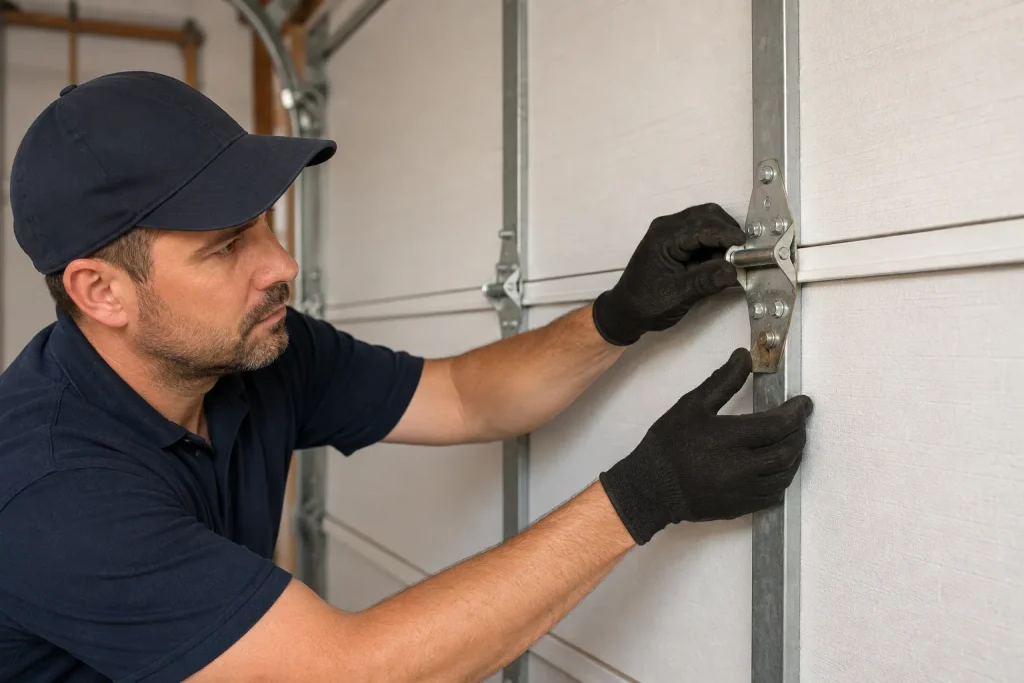
Diagnosing a noisy garage door starts with checking the parts that wear down first, since most sounds trace back to hardware, rollers, tracks, or springs.
A few checks help narrow down the cause:
- Test hinges and brackets by hand to feel for bolts that have worked loose over time.
- Spin each roller slowly to feel for grinding or resistance from worn ball bearings.
- Run a hand along the tracks to feel for bends, gaps, or rough spots.
- Look closely at the springs for rust, stretching, or visible gaps along the coils.
- Lift the door partway by hand to see if it feels heavier than usual.
To catch these warning signs even earlier and prevent them from turning into a full repair, read our guide on Early Signs of a Noisy Garage Door, which covers the small changes homeowners notice before the noise fully sets in.
Common Fixes for a Noisy Garage Door
The Right Lubrication for a Noisy Garage Door
Dry hinges and rollers create friction that shows up as squeaking within just a few weeks of missed maintenance.
Applying lubricant the right way makes a noticeable difference:
- Spray silicone lubricant directly onto each hinge pivot point
- Apply a light coat to roller stems while keeping the wheel itself dry
- Coat torsion springs along their length, skipping the ends near the cones
- Work lubricant into the chain drive links to quiet down the opener noise
- Wipe off any excess so that dust and debris have less to stick to
Applying silicone lubricant every few months as part of regular garage door maintenance keeps the entire door running noticeably quieter.
Tightening Loose Hardware
Loose bolts and brackets cause rattling that tends to get louder with each opening and closing cycle over time.
Tightening hardware properly involves a few simple steps:
- Go bolt by bolt along the entire track with a socket set
- Check every hinge, not just the ones closest to the opener
- Stop tightening once resistance is felt to avoid stripping the metal
- Inspect chain drive connections near the opener for slack
- Recheck the track supports to confirm they sit flush against the wall
Going bolt by bolt along the full length of the track brings the door much closer to running without any rattle.
Replacing Worn-Out Rollers
Rollers absorb constant friction, and years of steady daily use eventually wear them down enough to cause noise.
Replacing worn rollers usually follows this general approach:
- Remove the damaged roller from its bracket with care
- Choose nylon rollers over steel for quieter, smoother operation
- Check the roller stem and bearing before inserting the new roller
- Slide the new roller into the track and secure the bracket
- Test the door through a full cycle to confirm smoother movement
Scheduling garage door roller repair to replace flattened or cracked rollers restores smoother movement along the track.
Cleaning and Aligning the Tracks
Dirty or misaligned tracks create friction that shows up as noise during nearly every open-and-close cycle throughout the week.
Cleaning and aligning the tracks involves a few clear steps:
- Wipe down the inside of each track with a clean, damp cloth
- Check for bent sections by watching the door move through a full cycle
- Use a rubber mallet to gently tap minor bends back into place
- Keep lubricant out of the track groove itself to avoid trapping grime
- Confirm both tracks sit at matching angles once adjustments are done
Clearing out debris and straightening minor bends often brings the track back to smooth, even alignment for good.
Inspecting the Garage Door Opener
The garage door opener itself can be the source of the noise, especially in older chain-drive systems still common in many homes.
Inspecting the opener for noise involves checking a few key parts:
- Listen closely near the motor housing for grinding or clicking sounds
- Check chain tension and lubricate any dry links right away
- Install vibration pads between the motor and its mounting bracket
- Compare chain drive noise levels against a belt drive alternative
- Watch the opener complete a full cycle to spot any hesitation
Swapping to a belt drive or adding vibration pads often solves opener noise on its own without needing extra tools or a service call.
When Does a Noisy Garage Door Need a Professional Repair?
Professional repair becomes necessary once basic fixes like lubrication and tightening fail to resolve the noise.
A few signs point to a problem beyond a simple fix:
- Grinding or scraping continues even after the hardware has been checked and lubricated
- The door shifts unevenly or hesitates at certain points during a full cycle
- Manual testing shows the door will not hold its position when lifted halfway
- A spring shows visible rust, stretching, or gaps along the coils
- The opener struggles or stalls partway through an open or close cycle
Repeated attempts at a fix rarely work once any of these signs show up, which makes a trained technician better.
How Do Professionals Fix a Noisy Garage Door?
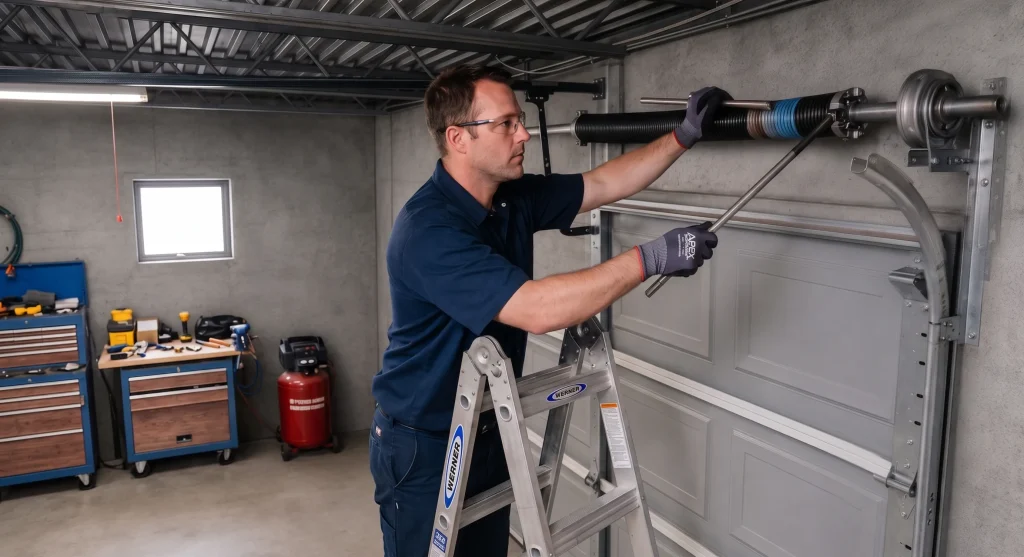
Professionals fix a noisy garage door by running a full inspection before touching any parts under tension, especially near the springs.
A typical professional repair follows a few key steps:
- Test the door’s balance by checking spring tension with proper tools
- Inspect every roller, hinge, and bracket for wear along the track
- Replace damaged parts with components suited to the door’s weight and age
- Rebalance the door after any spring adjustment or replacement
- Run a full test cycle to confirm the noise has been resolved
A trained technician handles each of these steps using tools and training specifically designed for high-tension parts.
How to Maintain a Garage Door After a Repair
Maintaining a garage door after a repair helps the fix last and keeps new noise from creeping back in over time.
A few habits help keep the door running well after any repair:
- Schedule a professional inspection every year to catch wear early
- Apply fresh lubricant to hinges and rollers every few months
- Watch for any returning noise that might signal an incomplete fix
- Keep the tracks clear of dust, debris, and old grease buildup
- Test the door’s balance occasionally by lifting it partway by hand
To keep a door running quietly for the long term, read our guide on How to Prevent a Noisy Garage Door From Returning, which covers the habits that help maintain smooth performance year-round.
Fix a Noisy Garage Door the Right Way With Expert Help
A noisy garage door usually points to a specific part that needs attention, and finding that part early is what makes any fix actually last over time. Knowing what to check, what to tighten, and when to call a professional keeps the door running the way it was designed to for years to come.
Garage Doors Guaranteed works with homeowners throughout Melbourne, FL, to track down the exact cause of a noisy garage door and resolve it with lasting, dependable repairs. Contact us or give us a call today, and let our team get every part of the door running quietly again for good and with real peace of mind.