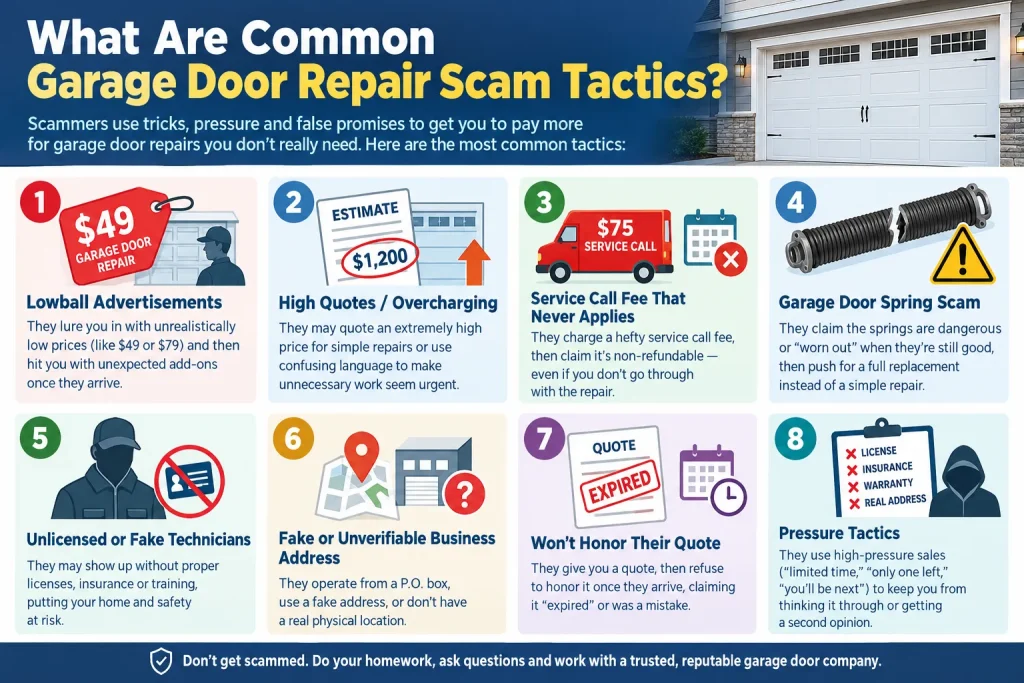
A garage door repair company running a scam typically relies on a handful of repeatable tactics rather than inventing a new approach for every customer. Bait pricing, fake urgency, and unverifiable technicians form the backbone of nearly every garage door repair scam reported across the industry.
Recognizing these tactics by name turns a confusing sales pitch into something a homeowner can evaluate calmly and confidently. This guide breaks down five common tactics scammers use, how each one plays out during a real service call, and what to do the moment one actually shows up.
Key Takeaways
- Bait-and-switch pricing gets a technician inside before naming the real cost
- Rebuild package upsells turn a single repair into a full hardware overhaul
- Unidentified technicians and unmarked vehicles signal unaccountable labor
- Fake local listings mimic trusted businesses to earn quick trust
- Fear-based pitches frame ordinary wear as an urgent safety hazard
How These Scam Tactics Play Out in Practice
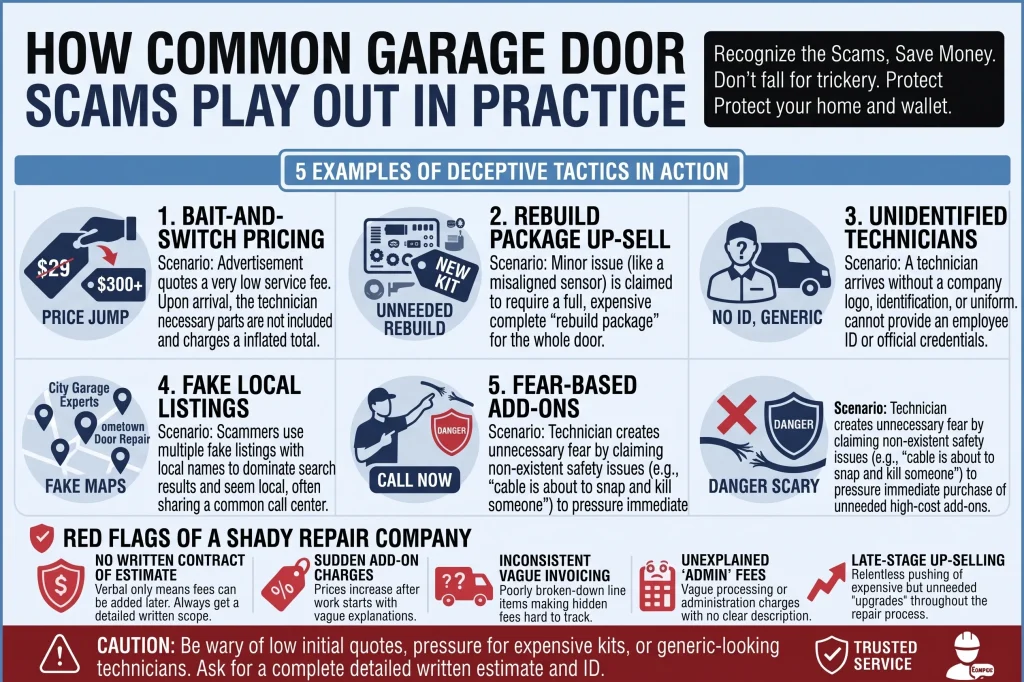
Time pressure and technical language leave little room for a homeowner to question a claim while a technician is standing at the door.
Tactic | How It Works | What It Costs the Homeowner |
Bait-and-switch pricing | Advertises a low service call fee, then inflates the price on-site | Hundreds in unexpected labor and parts charges |
Rebuild package upsell | Frames unrelated, unworn parts as required to justify a bigger bill | A full replacement charged for parts that never needed it |
Unidentified technicians | Sends unmarked vehicles with no verifiable employment status | No accountability if the repair fails later |
Fake local listings | Mimics an established local business in search results | Payment to a company with no real service history |
Fear-based add-ons | Frames normal wear as a catastrophic safety risk | Unnecessary parts and repairs billed as urgent |
Licensed, verifiable companies have nothing to lose by slowing down and confirming fair pricing with a homeowner before any repair work actually starts.
Bait-and-Switch Pricing
A service advertised at a low service call fee rarely stays that price once the technician actually stands in front of the door.
The pattern tends to unfold in this order:
- Advertising a fee well below the average cost for the same repair
- Sending a technician who inspects the door before naming a final price
- Claiming hidden damage justifies a much larger repair bill
- Adding disposal fees or surcharges after the work is already finished
- Framing the new total as urgent to prevent a homeowner from comparing options
To learn how this same pricing structure connects to a wider set of warning signs worth watching for, read our guide on Why Do Homeowners Fall for Garage Door Repair Scams?, which explains the psychology that makes bait pricing so effective.
Rebuild Package Upsell
A legitimate rebuild package bundles parts already worn on the same replacement cycle, but a scam version invents that wear to justify a bigger bill.
Signs of the dishonest version include:
- Disassembling the door before providing any written quote
- Insisting undamaged parts need replacement with no visible wear shown
- Bundling components with no shared age or failure pattern, such as a garage door spring paired with unrelated hardware
- Framing a partial fix as unsafe without naming a specific defect
- Refusing to explain why each bundled part was included in the total
Asking which specific parts show real wear, and why, separates a genuine rebuild recommendation from an inflated one.
Unidentified or Subcontracted Technicians
A technician arriving without visible company identification raises real questions about who is actually completing the repair.
Warning signs of this tactic include:
- Unmarked vehicles with no company logo, name, or contact information
- Personal vehicles used instead of a branded company truck
- Inability to confirm employment status when asked directly
- A different name given on-site than the one used when booking
- Limited familiarity with the company’s own service history or policies
Confirming employment status by calling the company’s main line before allowing property access quickly closes off this tactic.
Fake Local Business Listings
Scam operations frequently build websites or ads advertising garage door installation and repair to look like an established dealer already trusted in the area.
The deception typically relies on these signals:
- A business name nearly identical to a real, established local competitor
- Search ads listing a service area without any real office location
- Stock photography instead of real trucks, staff, or completed jobs
- No verifiable years in business or local service history
- Reviews concentrated in a short time window rather than spread over years
To review the exact wording and pricing patterns found in this kind of scam advertisement, read our guide on How to Tell If a Garage Door Repair Ad Is a Scam, which walks through each red flag before a technician is ever contacted.
Fear-Based Add-On Repairs
Ordinary wear on a spring or cable often gets reframed as a sudden hazard to justify a full garage door replacement the homeowner never requested.
The fear tactic commonly includes these patterns:
- Warning that a working part will fail soon without proof of wear
- Using vague language about structural risk without naming a defect
- Suggesting a full replacement instead of addressing the actual complaint
- Bundling several repairs together as a single required package
- Framing hesitation as a choice that raises the eventual repair cost
Photos of the specific spring or cable in question quickly confirm whether the claimed hazard reflects real wear or an invented reason to upsell.
How to Respond to a Garage Door Scam Tactic
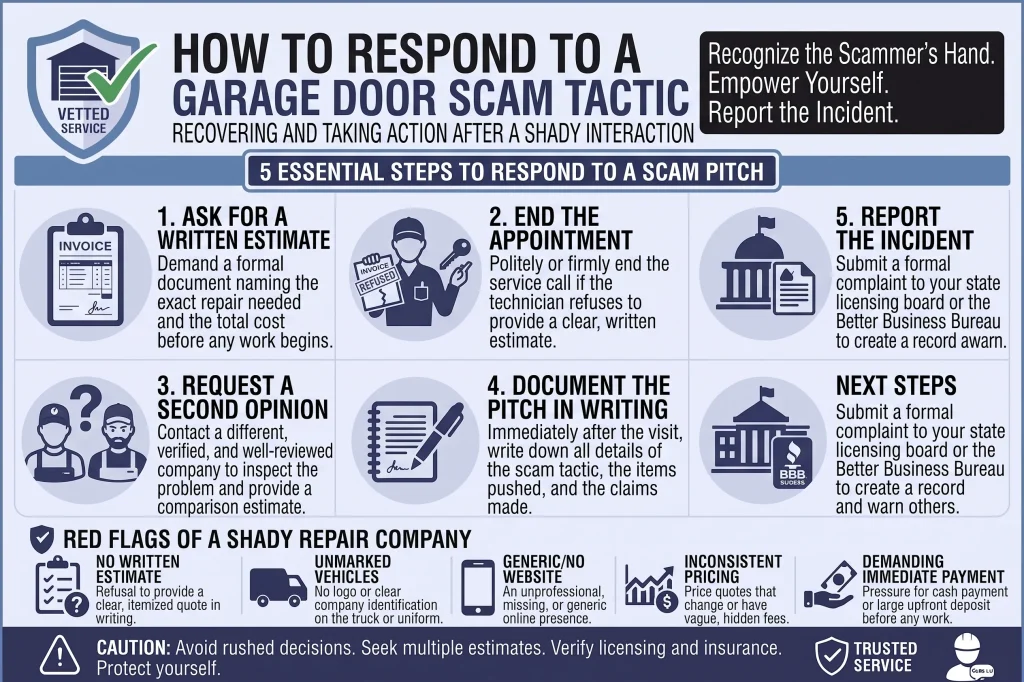
Identifying one of these tactics during a live garage door service call means little without a clear, practiced plan for what to do next.
The safest response to any of these tactics includes:
- Asking for a written estimate naming the exact repair before any work begins
- Ending the appointment if a technician refuses to provide one
- Requesting a second opinion from a different, verified company
- Documenting the pitch in writing immediately after the visit
- Reporting the incident to a licensing board or the Better Business Bureau
To walk through the complete process of confirming a company before hiring, read our guide on How to Find a Trustworthy Garage Door Repair Company, which outlines exactly what to verify before the first appointment.
Common Scam Tactics Lose Power Once They Are Exposed
A garage door repair scam depends on a homeowner failing to identify the tactic until the invoice is signed and the technician has already left the property. Calling out each pattern in advance turns a rushed, pressured decision into one with room for real comparison and independent verification.
Garage Doors Guaranteed works with homeowners across Melbourne, FL, to explain every recommended repair in plain, straightforward language before any work begins. Contact us or give us a call today, and let our team walk through exactly what a fair, honest estimate should genuinely include.